DIFC Free Zone
Company Formation

Set up in Dubai International Financial Centre — the region's leading financial hub with its own common-law jurisdiction, DFSA regulator and access to over 8,800 active members.

  • 100% Ownership
  • Established 2004
  • Independent DFSA Regulator
  • Common-Law Jurisdiction
  • 8,800+ Companies

DIFC — The MEASA Region's Leading Financial Centre

The Dubai International Financial Centre (DIFC) was established in 2004 under UAE Federal Law as a special economic zone for financial services. Spanning 110 hectares in central Dubai, it hosts more than 8,800 active companies, including over 1,000 regulated firms (DIFC, 2025), and operates a self-contained common-law jurisdiction regulated independently by the Dubai Financial Services Authority (DFSA).

The Dubai International Financial Centre was established in 2004 under UAE Federal Law as a special economic zone for financial services. It spans 110 hectares in central Dubai and is home to more than 8,800 active companies, including over 1,000 regulated firms (DIFC, 2025). DIFC's positioning is unique among UAE free zones: it operates a self-contained common-law jurisdiction, regulated independently by the Dubai Financial Services Authority (DFSA), with its own DIFC Courts and the DIFC-LCIA Arbitration Centre.

The Centre is the principal hub for the Middle East, Africa and South Asia (MEASA) financial economy. Its member base includes banks, insurance and reinsurance firms, asset managers, capital-market intermediaries, fintech and digital-asset companies — and the professional services that support them. DIFC's Innovation Licence opened the door to Web3, AI and digital-tech businesses; its DIFC Courts include the world's first court dedicated to the digital economy.

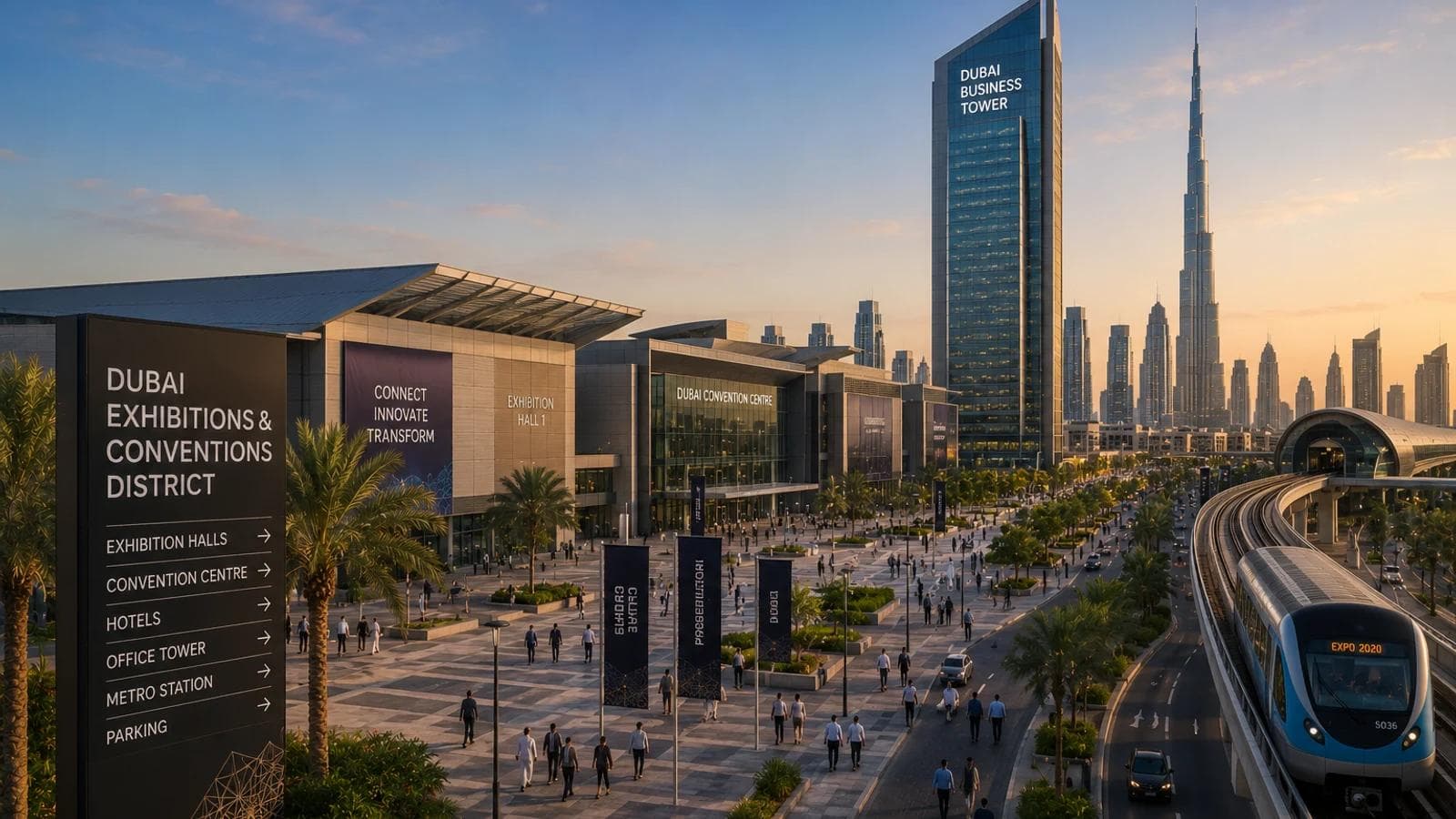
DIFC Gate building and the financial district at golden hour
Best known for: Regulated finance, asset management & common law

Why DIFC

DIFC is not a standard free zone — it is an independent jurisdiction inside the UAE with its own legal system based on English common law, its own court (the DIFC Courts, English-speaking), and its own financial regulator (the Dubai Financial Services Authority — DFSA). For regulated finance, family office, and English-law contracting, no UAE alternative matches it.

Independent Common-Law Jurisdiction

DIFC operates English common law for civil and commercial matters — distinct from the UAE Federal civil-code system that applies elsewhere. Contracts, shareholder agreements, M&A, dispute resolution all proceed on a framework that global counterparties recognise.

DFSA — Gold-Standard Regulator

The Dubai Financial Services Authority regulates financial services within DIFC under a framework benchmarked to UK FCA and Singapore MAS. DFSA licensing is the accepted credential for asset managers, fund managers, and family offices targeting global clients.

Home to Global Banking & Finance

DIFC hosts many of the world's leading banks (including HSBC, Standard Chartered and Goldman Sachs), with 8,800+ active companies and a workforce of 50,000+ (2025). The financial-services concentration is unmatched in the Middle East.

Specialised Family Office Regime

DIFC operates the only purpose-built UAE family office framework — DIFC Family Wealth Centre — with bespoke registration, asset-holding structures, and trust law adapted to multigenerational wealth. Particularly relevant for GCC and Indian family offices.

DIFC Innovation Hub — Fintech Ecosystem

The Innovation Hub houses 500+ fintech, regtech and venture firms with sandbox-style licensing, accelerator programmes (FinTech Hive), and direct DFSA engagement on novel-product authorisations. Largest fintech cluster in the Middle East and Africa.

DIFC Courts — Independent English-Language Judiciary

Standalone court system with internationally-recruited judges, English-language proceedings, and a track record of enforcing common-law contracts. DIFC Courts can also be elected as a forum by non-DIFC entities under opt-in jurisdiction.

Ideal for
  • Asset managers, fund managers, wealth managers (regulated)
  • Family offices & multi-generational wealth structures
  • Fintech, regtech, insurtech ventures
  • Holding companies wanting English common-law shareholder agreements
  • Insurance & reinsurance carriers
  • Professional services (legal, audit, consulting) to financial sector

DIFC Licence Categories

DIFC's licence framework is broader than most UAE free zones because the Centre supports both regulated financial firms (under DFSA categories) and non-financial firms (under DIFC's commercial licence).

Regulated Financial Services

Authorised by the DFSA under categorised licences. Covers banking, asset management, capital markets, advisory and Islamic finance — each category carries its own capital and conduct requirements.

  • Category 1 — Banking and deposit-taking
  • Category 2 — Market making, credit, securities dealing
  • Category 3A-3D — Brokerage, custody, fund and asset management
  • Category 4 — Advisory and arranging deals in investments
  • Category 5 — Islamic finance institutions

Innovation & Digital Tech

DIFC's Innovation Licence supports tech-led firms — Web3, AI, blockchain, fintech and digital-economy startups — alongside the DIFC Innovation Hub ecosystem.

  • Fintech and regtech
  • Web3, blockchain and digital assets
  • AI and machine-learning firms
  • Cybersecurity and data services
  • Innovation-hub startups

Non-Financial Commercial

Commercial licences for professional services that support the financial ecosystem — law firms, audit and advisory firms, consultancies and corporate-services providers.

  • Law and dispute-resolution firms
  • Audit, accounting and tax advisory
  • Management and strategy consultancy
  • Corporate services and family offices
  • Specialist B2B services

Legal Structures Under DIFC

DIFC recognises a broad set of legal forms — drawn from its common-law framework. The right one depends on shareholder model, regulatory category and capital plans.

01

Private Company Limited by Shares (LTD)

Closely held company with limited liability. The default vehicle for most DIFC commercial and professional businesses.

02

Public Company (PLC)

Company permitted to offer shares to the public — used for capital-raising structures and listed entities.

03

Limited Liability Partnership (LLP)

Partnership form combining limited liability with the operational flexibility of a partnership — popular with law firms and advisory practices.

04

Recognised Company (Branch)

Branch of an existing UAE or overseas parent registered in DIFC — operates under the parent's name and balance sheet.

05

Foundations

DIFC Foundations are common-law structures used for succession planning, asset protection and philanthropic vehicles.

How a DIFC Company Is Formed

DIFC runs incorporation in three stages — DFSA regulated firms have an additional in-principle regulatory approval before the legal entity is registered.

  1. 01

    Confirm the Activity & Regulatory Category

    Match the planned activity to DIFC's commercial licence or, for financial services, to one of the DFSA categories (1, 2, 3A-3D, 4 or 5). Category drives capital, conduct and reporting requirements.

  2. 02

    Submit In-Principle Approval

    For DFSA-regulated activities, an in-principle regulatory application is submitted with business plan, governance framework and key-personnel applications. DFSA review typically runs several weeks.

  3. 03

    Reserve the Name & Lease Office Space

    Reserve the proposed company name with the DIFC Registrar of Companies and lease office space — Innovation Hub co-working, serviced office or Gate Village/Gate Building space.

  4. 04

    Register the Legal Entity

    Submit incorporation documents to the DIFC Registrar of Companies. Articles of Association are drafted to the chosen structure (LTD, PLC, LLP, branch or foundation).

  5. 05

    Open the Corporate Bank Account

    Onboard with a DIFC-active bank using the corporate documents and the regulatory file. DIFC entities are widely accepted across major UAE and international banks.

  6. 06

    Apply for Investor & Employee Visas

    Investor and employee visas are processed through the DIFC Government Services Office alongside Emirates ID and medicals — typically completed within days of the licence being issued.

Documents Required for DIFC Setup

The standard document set is consistent across structures. DFSA-regulated activities require an additional regulatory file — business plan, governance, AML framework and key-personnel CVs.

  • Passport copies of all shareholders and directors (valid for at least 6 months)
  • UAE residence visa copy for residents in the country
  • Emirates ID for UAE residents
  • Passport-sized photographs of shareholders
  • Three proposed company names for reservation
  • Personal information form or KYC questionnaire
  • For corporate shareholders: parent licence, MoA, board resolution, UBO list, incumbency certificate

Why Choose DIFC for Your Free Zone Setup

DIFC's value is unique among UAE free zones — a fully independent common-law jurisdiction, an internationally recognised regulator and a financial ecosystem on the doorstep.

Common-law jurisdiction independent of UAE civil law and the federal system

Regulated by the Dubai Financial Services Authority (DFSA) — an internationally recognised independent regulator

DIFC Courts and DIFC-LCIA Arbitration Centre for English-language commercial dispute resolution

100% foreign ownership with no UAE-national shareholder requirement

0% corporate tax on qualifying income under the Qualifying Free Zone Person regime

Access to 8,800+ member companies and 1,000+ regulated firms (2025)

MEASA region's leading hub — Middle East, Africa and South Asia financial economy

Innovation Licence and Innovation Hub for fintech, Web3 and digital-tech startups

Tax & Compliance Position — DIFC

DIFC entities are subject to the UAE Federal Corporate Tax (DIFC has no independent tax regime), and can qualify for the 0% QFZP rate. DIFC is not a Designated Zone for VAT purposes — Federal VAT applies to taxable supplies in the standard way.

UAE Corporate Tax

9% Headline · 0% QFZP on Qualifying Income

DIFC entities follow UAE Federal Corporate Tax under Decree-Law 47/2022 — 9% on taxable income above AED 375,000. Most DIFC entities (regulated and non-regulated) can elect the QFZP regime and pay 0% on Qualifying Income. The DIFC's regulated-financial profile makes QFZP particularly common.

QFZP eligibilityQFZP eligibility requires Qualifying Income only, adequate Free Zone substance (DIFC's office-presence requirements typically satisfy this), arm's-length pricing, and audited financials. Regulated financial activity (DFSA-licensed) is on the Qualifying Activities list under Ministerial Decision 265/2023.
UAE VAT

5% Standard Rate · Standard VAT Regime

DIFC entities follow standard UAE VAT — 5% on taxable supplies, AED 375,000 mandatory registration threshold. Financial services have specific VAT-exempt and zero-rated treatments under the Federal Decree-Law 8/2017 and FTA Financial Services Guide.

Not a Designated ZoneDIFC is not a Designated Zone under Cabinet 59/2017 — by design, since DIFC's profile is financial services rather than physical-goods movement. Designated Zone treatment is not commercially relevant for the DIFC tenant base.

Ongoing Compliance Obligations

  • Annual Corporate Tax return (9 months from FY-end)
  • VAT returns per FTA assignment (most financial services VAT-exempt)
  • Audited financial statements (mandatory under DIFC Commercial Companies Law)
  • DFSA returns for regulated firms (Cat 1-5, varies by category)
  • ESR notification + report (financial services in scope)
  • UBO register (DIFC Companies Registrar)
  • AML / CFT — DIFC has its own AML regime under DFSA

Sources & official references: Federal Decree-Law 47/2022 (Corporate Tax) · Cabinet Decision 100/2023 (QFZP) · Federal Decree-Law 8/2017 (VAT) · FTA Financial Services VAT Guide · DIFC Companies Law 2018 · DFSA Rulebook

Sectors Active in DIFC

DIFC's member base reflects the financial-services backbone of the MEASA region.

Banking & Capital Markets

Asset & Wealth Management

Insurance & Reinsurance

Fintech & Innovation

Legal & Dispute Resolution

Audit & Advisory

Family Offices

Corporate Services

The Avyanco Advantage

Avyanco runs DIFC engagements end-to-end — from activity scoping and DFSA category selection through to a banked, visa-ready entity registered for Corporate Tax and VAT.

Activity & Category Advisory

We map the business to the right DIFC commercial licence or DFSA category — clear-eyed about the capital, conduct and reporting that come with each.

Common-Law Structuring

Holding, fund and JV structures designed around DIFC's common-law framework and UAE Corporate Tax efficiency.

Regulatory File Preparation

For DFSA-regulated activities, we prepare the business plan, governance and AML file the regulator's review will require.

Corporate Bank Account

Introductions to UAE and international banks active in DIFC, plus the compliance file the bank's onboarding requires.

Investor & Employee Visas

Investor, partner and employee visas processed through the DIFC Government Services Office alongside Emirates ID and medicals.

Corporate Tax & VAT

FTA registrations and ongoing filings — including QFZP eligibility assessment for the 0% qualifying-income rate.

Meet Our Specialists

Five partner-level advisors covering every leg of a DIFC setup — formation, regulatory file, tax and ongoing compliance.

Chandy Joseph, Sales Director at Avyanco

Chandy Joseph

Sales Director · UAE Company Setup

Astha, Senior Business Setup Consultant at Avyanco

Astha

Senior Business Setup Consultant

Dhiren, Business Setup Consultant at Avyanco

Dhiren

Business Setup Consultant

Hadir, Business Setup Consultant at Avyanco

Hadir

Business Setup Consultant

Tanya, Business Setup Consultant at Avyanco

Tanya

Business Setup Consultant

Why Founders Choose Avyanco for DIFC

Three things that come up in every DIFC engagement once the licence is issued.

Avyanco advisor closing a DIFC free zone company formation engagement with a founder

Financial-Services Expertise

Live engagements with DFSA-regulated firms, fund managers, family offices and fintechs means we know which category, capital and conduct requirements actually apply.

End-to-End Delivery

Licence, regulatory file, articles, office, bank, visa and tax — handled by one team on one engagement letter.

Built for Regulated Realities

Recommendations shaped by how regulated financial firms actually operate — not generic SME templates dressed up for a financial centre.

What Clients Say

A slice of recent feedback from founders who set up their UAE companies through Avyanco.

DIFC Free Zone — Frequently Asked Questions

Common questions about setting up in Dubai International Financial Centre.

What is DIFC and how is it different from other UAE free zones?
Dubai International Financial Centre was established in 2004 as a special economic zone for financial services. Unlike other UAE free zones, DIFC operates its own common-law jurisdiction, regulated by the Dubai Financial Services Authority (DFSA), with separate DIFC Courts and a dedicated arbitration centre. This makes DIFC the region's preferred jurisdiction for regulated financial services and complex international commercial work.
Who regulates companies in DIFC?
Financial firms are regulated by the Dubai Financial Services Authority (DFSA), an independent regulator established with DIFC. Non-financial commercial companies are regulated by the DIFC Authority and the DIFC Registrar of Companies. Disputes are heard by the DIFC Courts, a common-law court system independent of the UAE federal system.
Which licence categories does DIFC offer?
DFSA-regulated financial services are issued under five categories: Category 1 (banking and deposit-taking), Category 2 (market making and credit), Category 3 (asset management, brokerage, custody — split into 3A-3D), Category 4 (advisory and arranging) and Category 5 (Islamic finance). Non-financial activities are licensed under the DIFC commercial licence framework.
How long does DIFC company formation take?
Non-regulated commercial setups typically complete in two to four weeks. DFSA-regulated firms add a regulatory in-principle approval phase that runs several weeks on top, depending on the category and the completeness of the regulatory file.
Can a foreign founder own 100% of a DIFC company?
Yes — DIFC permits full foreign ownership across every legal structure with no UAE-national shareholder requirement. The Centre has operated this way since establishment in 2004.
Does DIFC qualify for the 0% UAE Corporate Tax rate?
DIFC is recognised among the UAE's free zones for Corporate Tax purposes. The 0% rate applies to qualifying income earned by a Qualifying Free Zone Person under the Federal Tax Authority's regime — non-qualifying income is taxed at the standard rate. We assess QFZP eligibility at the planning stage.
What office options does DIFC offer?
Innovation Hub co-working desks, serviced offices, Gate Village and Gate Building leased space, and bespoke Class-A office options. Innovation Hub is the entry point for fintech and digital-tech startups; Gate Village and the Gate Building host established financial firms.
Can DIFC companies serve UAE mainland clients?
Yes — DIFC companies can contract with UAE mainland customers, though some regulated activities require additional coordination with the UAE Securities and Commodities Authority. For non-financial DIFC businesses, mainland service delivery is generally straightforward.
Verification & independence

Content verified against the live Avyanco site, the Dubai Financial Services Authority (DFSA) regulatory framework and publicly verifiable secondary sources as of June 2026. The official DIFC About page was unreachable during compilation, so verification triangulated across the DFSA framework and independent sources. Avyanco Business Consultancy LLC is independent of DIFC, DFSA, the DIFC Courts and the DIFC Registrar, not endorsed by any of them, and not affiliated with any UAE government agency.

DFSA categories, capital requirements, conduct rules, DIFC common-law jurisdiction provisions and Qualifying Free Zone Person eligibility evolve. Always confirm the current rules for your specific activity directly with the DFSA, the DIFC Registrar and the Federal Tax Authority before acting on any fact on this page.

Get expert advice

Speak to a UAE specialist

Tell us what you need and a senior advisor will respond within one business day — no obligation.

  • Partner-led — you speak to a senior advisor, not a junior analyst
  • A straight answer on the right structure, cost and timeline
  • A reply within one business day, every time
  • A free, no-obligation 30-minute scoping call

Confidential · A senior partner responds within one business day

Ready to Set Up in DIFC Free Zone?

Speak to an Avyanco partner about a DIFC licence scoped to your business — whether you're standing up a regulated financial firm, a fintech, a family office or a professional services practice.

Book a Consultation